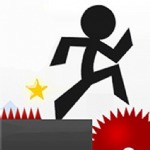
Geometry Rush is a fast-paced platforming experience that tests your timing, reflexes and sense of rhythm as you guide a geometric avatar through tight corridors and hazardous jumps. The gameplay theme is simple but merciless: hit the right beat to jump over spikes, dodge moving obstacles and push toward the finish line without errors. Like other rhythm-platformers, every section rewards memorization and split-second decisions, and each mistimed press sends you back to the start — demanding patience and steady improvement. Geometry Rush blends minimalist visuals with a steady tempo that forces you to learn level patterns, adapt to a rising difficulty curve and sharpen your muscle memory. Whether you prefer precise single taps or rapid sequences of jumps, the core loop revolves around mastering the game's mechanics through repetition, observing platform spacing, and tuning your pace to the soundtrack. Expect tight platforming, sudden tempo shifts, and moments where a single correct input feels deeply satisfying.
How to Play
In Geometry Rush you move through discrete stages where the primary objective is to reach the finish line while avoiding hazards. The mechanics are intentionally lean: the core action is timing a jump to clear gaps, bypass spikes and traverse moving platforms. Levels are built as short runs with precise geometry, so the game emphasizes platforming accuracy, rhythm and consistent practice. The difficulty curve ramps by introducing faster obstacles, narrower platforms and more complex sequences that demand sharper reflexes. There are no elaborate upgrade systems — progression comes from learning patterns, improving your precision and beating increasingly demanding stages.
Controls
Controls are designed for immediate responsiveness on both PC and mobile, matching the game's quick tempo and tactile demands.
- PC: Press the spacebar or click the mouse to jump; timing matters more than duration.
- Mobile: Tap the screen to make your character hop; quick multi-taps handle tight sequences.
- Input feels responsive to support rapid retries and refine muscle memory through repetition.
Tips
Adopt strategies that focus on pattern recognition and steady pacing. Use short taps rather than long presses to control small hops, and listen to the audio cues to sync jumps with the level's rhythm. When a section feels unfair, slow your pace mentally and break the sequence into chunks to memorize obstacles. Practicing the same run increases checkpoint-like familiarity even if the level resets you; this mental checkpoint system helps you predict moving platforms and time jumps. Emphasize precision over speed in early runs, accept that restarts are part of the learning loop, and keep a calm, patient mindset to overcome tight sequences — patience is often the difference between repeated failure and steady improvement.
More Games Like This
Geometry Rush After finishing the game, you might want to play other challenging and popular games. My Perfect Hotel or Murder we recommend checking out our other popular games like
Frequently Asked Questions
Q: Does Geometry Rush have checkpoints within levels?
A: Most runs reset to the beginning after a mistake, so the game rewards memorization and incremental improvement rather than relying on in-level checkpoints.
Q: Are there different modes or level packs?
A: Expect a variety of stages with increasing complexity and optional challenge levels that test your timing and platforming skills under varied tempo and obstacle patterns.
S: How can I improve my timing for the hardest jumps?
C: Break the sequence into smaller parts, use the rhythm of the music to sync your taps, and practice each segment until it becomes automatic.
S: Is the game better with keyboard or touch controls?
C: Both work well; choose the input that gives you the most consistent response — many players prefer keyboard for precise taps and mobile for its immediacy.
Geometry Rush rewards focused practice and an ear for rhythm more than complex mechanics. If you enjoy tight platforming and mastering sequences through repetition, the game offers satisfying progression and tense moments of skill expression. Explore similar rhythm-based platformers to continue refining your timing and to discover new challenges.